


Architects feel the squeeze: more projects, thin margins, not enough hands. A Remote Architect Assistant adds skilled production capacity, drafting, Revit modeling, and documentation, without long hiring cycles or big overhead. From cost savings and access to specialized skills to round-the-clock productivity, this model is transforming how architecture teams deliver projects. This guide explains why firms are embracing remote talent, the measurable benefits, and how platforms like Remote AE make global collaboration efficient, secure, and compliant with ISO 19650 and industry best practices.
According to recent market research, the global architecture, engineering, and construction (AEC) sector is projected to expand from $8.9 billion in 2022 to $16.5 billion by 2030, reflecting strong and sustained growth across the industry.
Rising demand meets fixed headcount. In many markets, recruiting takes months, and salaries keep climbing. Remote hiring gives you vetted talent in days, often at a lower fully loaded cost. Global access also boosts speed.
Your redlines can land at the close of business and come back ready to review the next morning. Besides, remote collaboration tools make it practical.
Autodesk Construction Cloud (BIM 360/ACC) handles shared models and issue tracking; Asana or Trello manages tasks; Slack/Teams keeps day-to-day comms tight.
Firms that route documentation to a remote assistant protect principal hours for clients and design.
Below are the key advantages you secure by hiring a remote architect assistant:
One of the biggest advantages of hiring a remote architectural assistant is financial efficiency. Firms save up to 60% in operational costs by eliminating office space, local salaries, and employee benefits.
A U.S.-based junior drafter may cost $70,000+ annually, while a remote professional through Remote AE provides the same expertise at a fraction of that, without compromising deliverable quality.
Remote AE sources pre-vetted talent experienced in Revit drafting support, BIM execution plans, and architectural documentation standards.
Each assistant follows your project’s scope of work, file structure, and QA/QC guidelines, ensuring every drawing aligns with your firm’s established design process.
You can hire for the exact skills you need: Revit families, parametric modeling, massing studies, or fast redlines. Remote AE verifies every assistant is familiar with ISO 19650-compliant data management and coordination workflows.
This means your remote team operates with the same precision and accountability as your in-house staff.
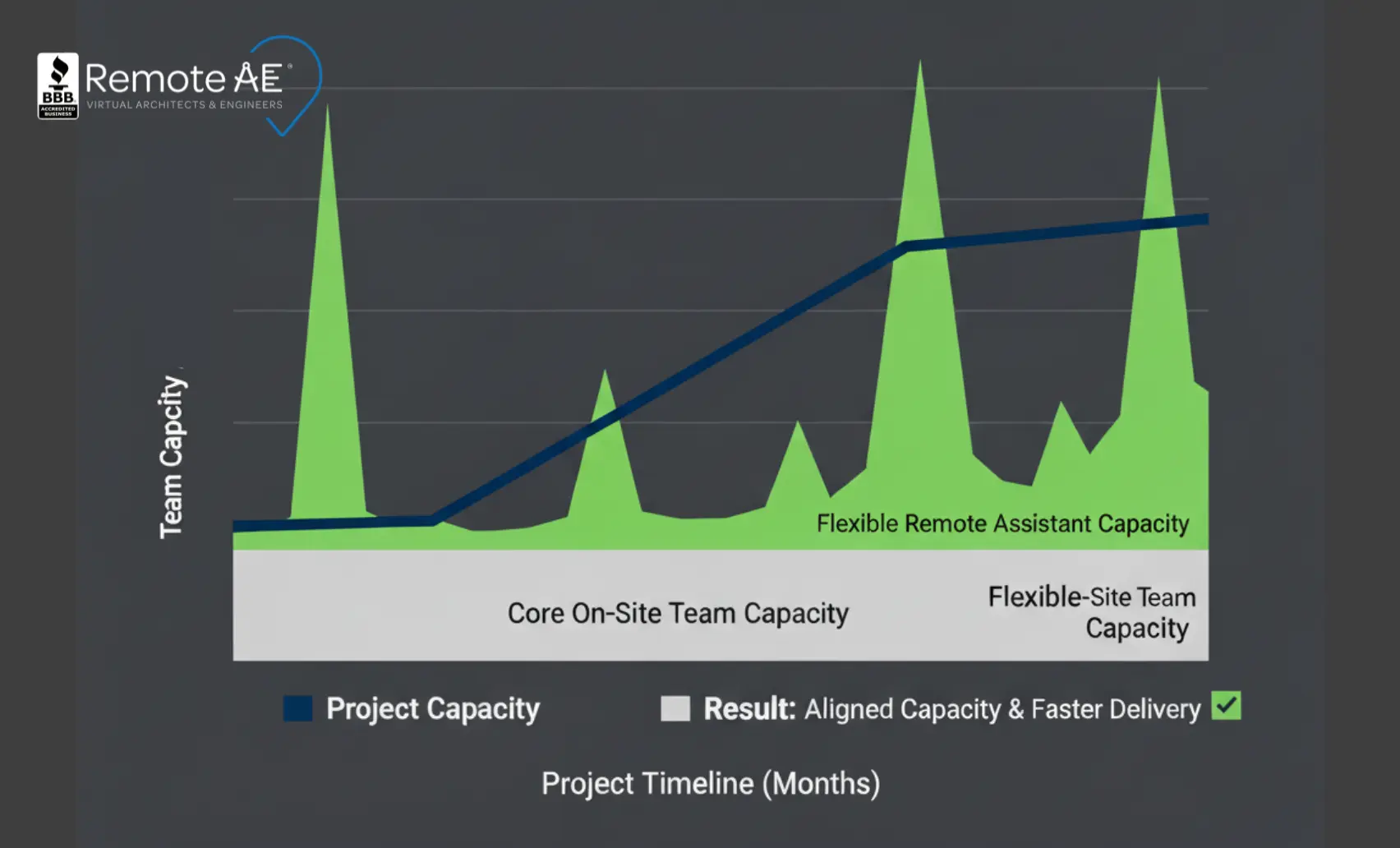
Architecture projects rarely stay constant. Some weeks bring bid packages, others require detailed construction documentation (CD) or permit revisions. An architect virtual assistant enables firms to scale up or down quickly, without committing to long-term contracts or onboarding costs.
This scalability helps firms stay agile in competitive markets. Even if you’re handling multiple RFPs or managing as-built model updates across projects, your resources align perfectly with the active workload.
Key advantages:
Repetitive production work drags senior staff away from design intent, client meetings, and code strategy. A Remote Architect Assistant handles the grind: view setup, callout cleanup, PDFs for submittal, revision bubbles, sheet index updates. That keeps licensed architects focused on decisions, not drafting.
A Remote Architect Assistant, paired with a clear handoff routine, creates an almost continuous production cycle. Architects in one time zone define changes; assistants in another time zone execute; checkers validate in the morning.
This “follow-the-sun” cycle is common in construction industries outsourcing for BIM coordination and submittal prep because it shrinks idle wait time between iterations.
Need Revit families for a healthcare project? Need parametric curtain wall options? Need a code research summary for an AHJ? You don’t always have those specialties in-house.
With remote architectural support and a Virtual construction Assistant model, you can slot in targeted skills for specific milestones instead of hiring a full-time specialist you can’t keep busy year-round.
Clean documentation and faster turnaround help you respond to clients (or authorities) with confidence. When clients see updated sheets and schedules on time, trust goes up. Strong client trust leads to repeat scope and smoother approvals, which feed revenue.
Fatigue is a risk factor for mistakes in construction documents. You’ve seen it: 1 a.m. revisions, duplicated keynotes, accidental view scales.
When routine drafting, revisions, and markups move to a trusted remote assistant, you cut that late scramble. The team regains margin for QA, coordination, and client calls.
Integrating a remote team doesn’t mean changing your workflows. Remote architect assistants use the same platforms you already rely on.
They collaborate via workshared Revit models, synced through ACC/BIM 360, confirming that redlines, markups, and model updates happen in real time.
Version control, permissions, and naming are handled using ISO 19650-compliant structures, keeping your digital assets secure and organized.

Working with Remote AE is simple and transparent. The process is built around seamless integration and measurable performance:
This structured process guarantees that every assistant operates as a true extension of your in-house team.
With 15+ years supporting architecture, engineering, and construction firms, Remote AE understands what design teams need most: accuracy, reliability, and communication.
Remote AE isn’t just a staffing provider; it’s a long-term operations partner helping firms scale smarter.
Hiring a remote architect assistant helps you meet deadlines faster, reduce costs, and focus on what truly matters: design innovation. With Remote AE, you gain a team that understands BIM, adheres to ISO 19650 data standards, and delivers consistent results across all phases of your projects. Contact Remote AE today to discuss your needs and get matched with a skilled architectural professional within days.
A remote architect assistant manages CAD and Revit drafting, redlines, BIM coordination, and documentation updates. They can also assist with submittals, RFI tracking, and render markups. Most teams start them on drafting tasks before expanding into model management or client deliverable preparation.
Remote teams use Autodesk Construction Cloud (ACC) or BIM 360 for cloud worksharing. These platforms host central models, manage permissions, and sync changes in real time.
Use NDAs, role-based CDE permissions, VPN access, and activity logs. Files should stay within secure cloud systems like Autodesk Docs or Procore. Limit downloads, disable external sharing, and enforce two-factor authentication to ensure client data stays protected.
Both. Remote assistants support residential drafting for remodels, custom homes, and permit sets, as well as commercial projects such as office interiors, retail, and healthcare layouts. The key is matching their software skillset and experience with your project type.
Other articles you may like:

