

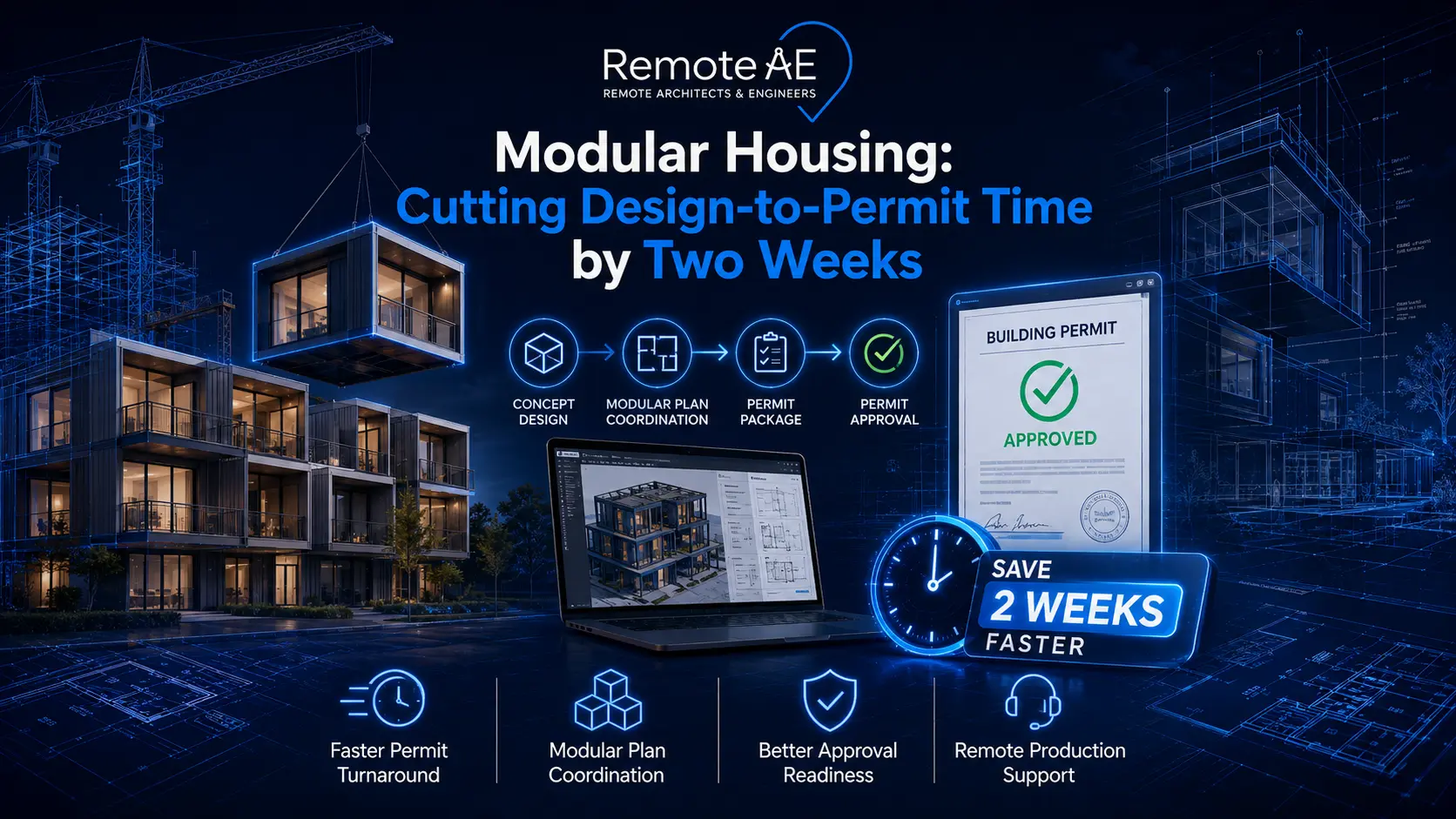
Permits stall projects. Modular housing can claw back two weeks in the design-to-permit window by standardising drawings, using pre-approved modules, and keeping documents moving 24/7 with a virtual construction assistant. McKinsey estimates that modular can speed delivery by 20–50% and trim costs by up to 20% when executed well (McKinsey, 2019; 2023). BIM adoption and a clear Common Data Environment (CDE) reduce rework and search time, which often consume ~35% of staff hours (Autodesk + FMI, 2018/2025).
This playbook explains what modular means today, why traditional permits drag, where the two-week gain comes from, and which construction industries’ outsourcing roles accelerate submittals, plus the exact documents reviewers expect.
What Modular Housing Really Means in Today’s AEC Context?
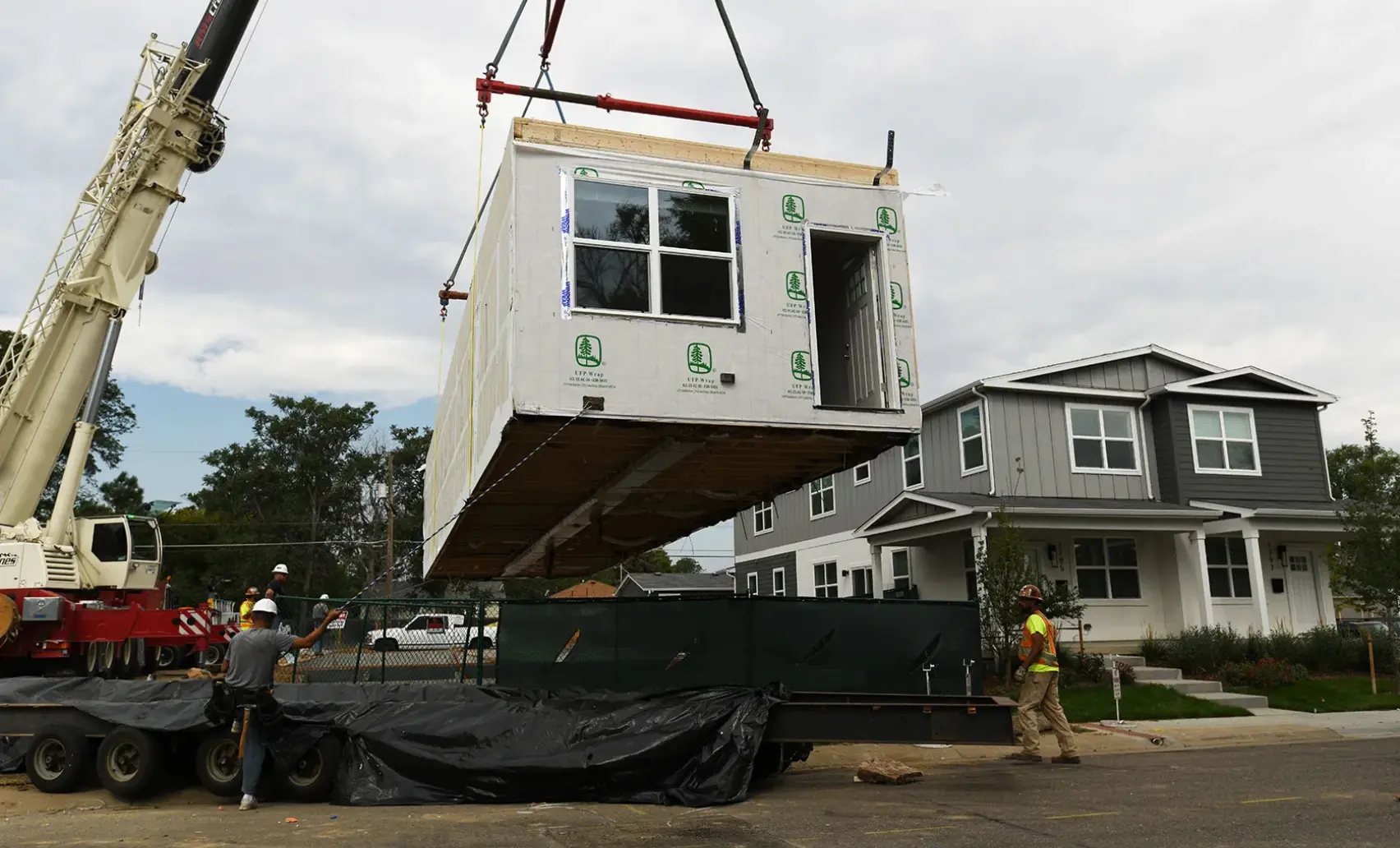
Modular housing assembles volumetric or panelized units built off-site under controlled conditions, then installs them on prepared foundations. It differs from traditional construction by shifting work to factories and repeating standardised designs. It also differs from prefabrication: prefab can mean components; modular typically means full volumetric units or repeatable panels with integrated MEP.
Digital backbone. BIM + a CDE aligned to ISO 19650 keep teams in sync and support consistent naming, states, and approvals. Clear information management shortens iterations with plan reviewers.
Quick examples.
- Single-family: Factory-built modules with a pre-checked structural set reduce plan review iterations.
- Multi-unit: Repeatable unit types speed life-safety and accessibility checks.
- Commercial: Modular classrooms or clinics leverage state modular labels and standardised specs for faster approvals (MBI).
Why the Design-to-Permit Phase Takes So Long in Traditional Construction?
For conventional projects, the design-to-permit phase often feels like a slow-motion bottleneck. Here’s why:
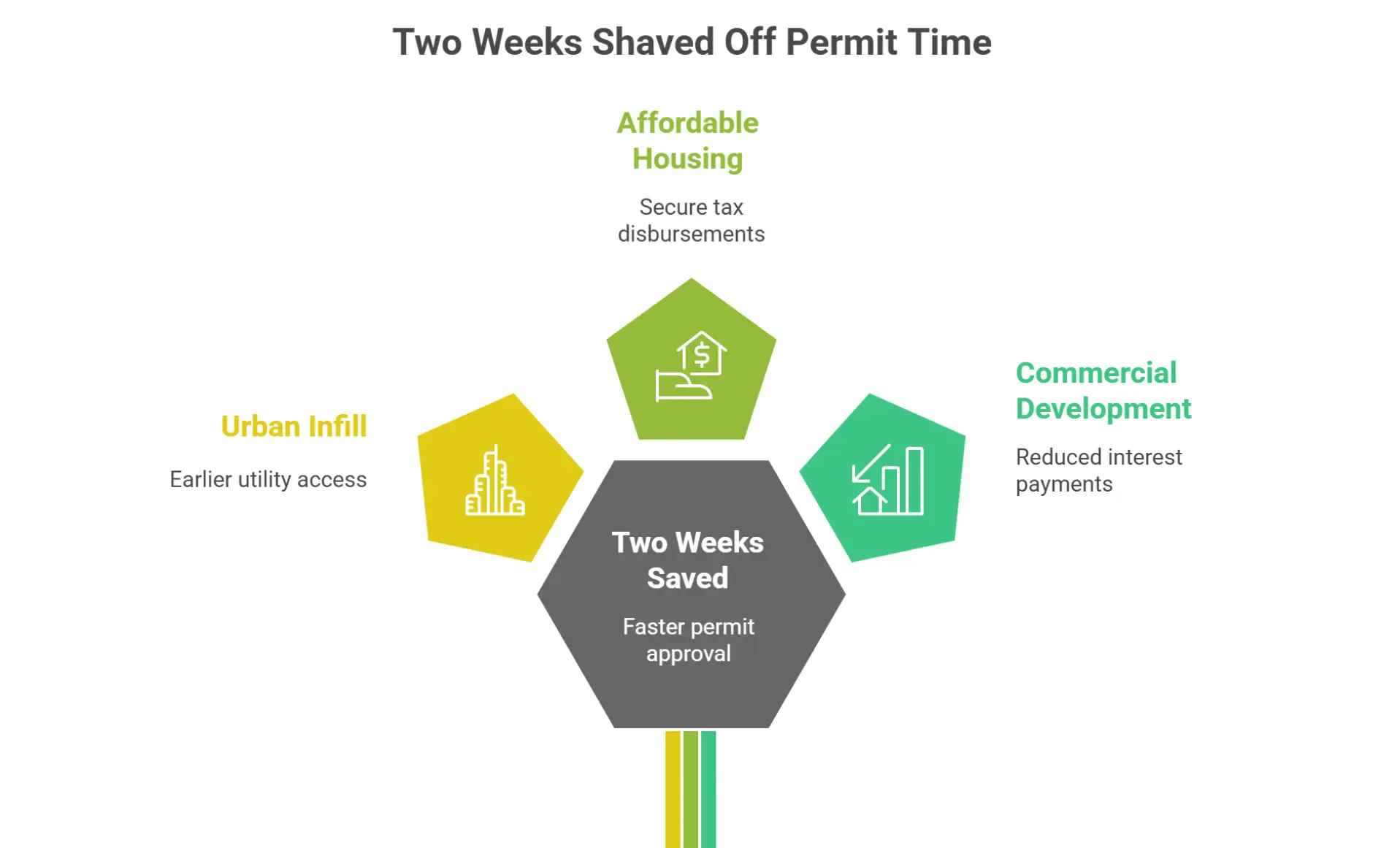
- Manual drafting delays: Architects and engineers may still juggle revisions across CAD files without BIM-driven collaboration.
- Coordination breakdowns: Architects, engineers, and planners pass PDFs back and forth without a single CDE or clear ownership. The result is missing references, mismatched versions, and extra cycles.
- Regulatory back-and-forth: Authorities Having Jurisdiction (AHJs) issue correction notices when submittals are incomplete or unclear.
- Errors in drawings: A missing geotechnical report, uncoordinated utility tap, or overlooked fire suppression system can add weeks.
- Budget & schedule impact. Time is money: construction pros lose ~35% of weekly hours to non-productive tasks like searching for info and fixing errors; holding costs mount during permit waits (Autodesk + FMI; BIAW). A Washington analysis found average permit delays of 6.5 months costing $31,375 in carrying costs, showing why shaving even two weeks matters.
Each round of plan check or revision extends timelines and adds cost. Stakeholders, developers, lenders, and contractors feel the impact in holding costs, schedule creep, and delayed groundbreaking. A single late revision can trigger a chain reaction across project milestones.
The Modular Advantage: Cutting Two Weeks from Design-to-Permit
Modular housing moves repeated design decisions into templates and pre-engineered modules. That alone removes cycles from drafting and QA. Multiple studies suggest modular can accelerate project timelines 20–50% and lower costs up to 20%, driven by parallel off-site fabrication and standardised details.
- Standardised templates: Reusable Revit families and modular shop drawings reduce drafting cycles.
- Pre-approved design modules: Some state modular programs allow factory-certified systems, meaning fewer AHJ questions.
- Faster collaboration: Digital models stored in a Common Data Environment (CDE) and reviewed by virtual engineering assistants reduce errors before submittal.
- Time savings: Cutting just two weeks at the permit stage accelerates occupancy permits, improves lender confidence, and saves thousands in labour and overhead costs.
With parallel construction, site work starts while factory units are manufactured; the time savings compound. Two weeks earlier approval can mean two weeks earlier revenue.
Required Documents & Checklists for First-Pass Approval
One of the most overlooked ways to accelerate modular housing permitting is having a complete, accurate submittal package from the start. Incomplete or inconsistent documentation is the #1 reason AHJs issue correction notices, which can stall projects for weeks.
A clean first-pass package typically includes:
- Architectural + structural plans (BIM/Revit drawings, shop drawings).
- MEP coordination drawings (with fire suppression details).
- Geotechnical report and soil testing results.
- Utility tap confirmations (water, sewer, electrical).
- Energy compliance reports (per local code).
- Factory certification documents under the state modular program.
- Occupancy permit roadmap with staged approvals.
- Fire suppression (sprinkler narratives, hydrant flow data).
Why this works: Clean, complete sets reduce cycles. AEC firms often rely on a permit expediter for modular projects, but even then, the most effective teams use a modular building documents checklist to ensure nothing slips through. Digital storage in a Common Data Environment (CDE) like BIM 360 or Autodesk Construction Cloud makes it easier to control file versions and share updates instantly with stakeholders.
Breaking Down the “Two-Week” Time Savings
How exactly does modular housing trim two weeks from the design-to-permit timeline? The efficiency comes from four key areas:
Design efficiency
Using standardised Revit families and modular templates cuts drafting hours. Repeated unit types mean you swap parameters instead of redrawing. Pre-checked design elements (like bathroom pods) require less back-and-forth with engineers.
Permit preparation
Coordinated BIM models reduce errors and minimise resubmittals. Virtual assistants can clean drawing sets and properly label all attachments before submission.
Regulatory review
AHJs spend less time questioning factory-certified modules that have already passed state modular approval. Pre-application meetings also reduce review cycles by clarifying expectations early.
Virtual staffing advantage
Remote AE’s virtual construction assistants bundle checklists, tag missing items, and post responses in your CDE overnight. With assistants working across time zones, submittals can move forward overnight instead of waiting for the next business day.
Example workflow comparison:
- Traditional permitting: 6–8 weeks from design package to approval.
- Modular permitting with digital workflows: 4–6 weeks, saving an average of two weeks and thousands in holding costs.
Case Scenarios: Where Two Weeks Make the Difference
Shaving two weeks off the modular construction permit process isn’t just about speed; it can transform project outcomes. Here are some real-world scenarios:
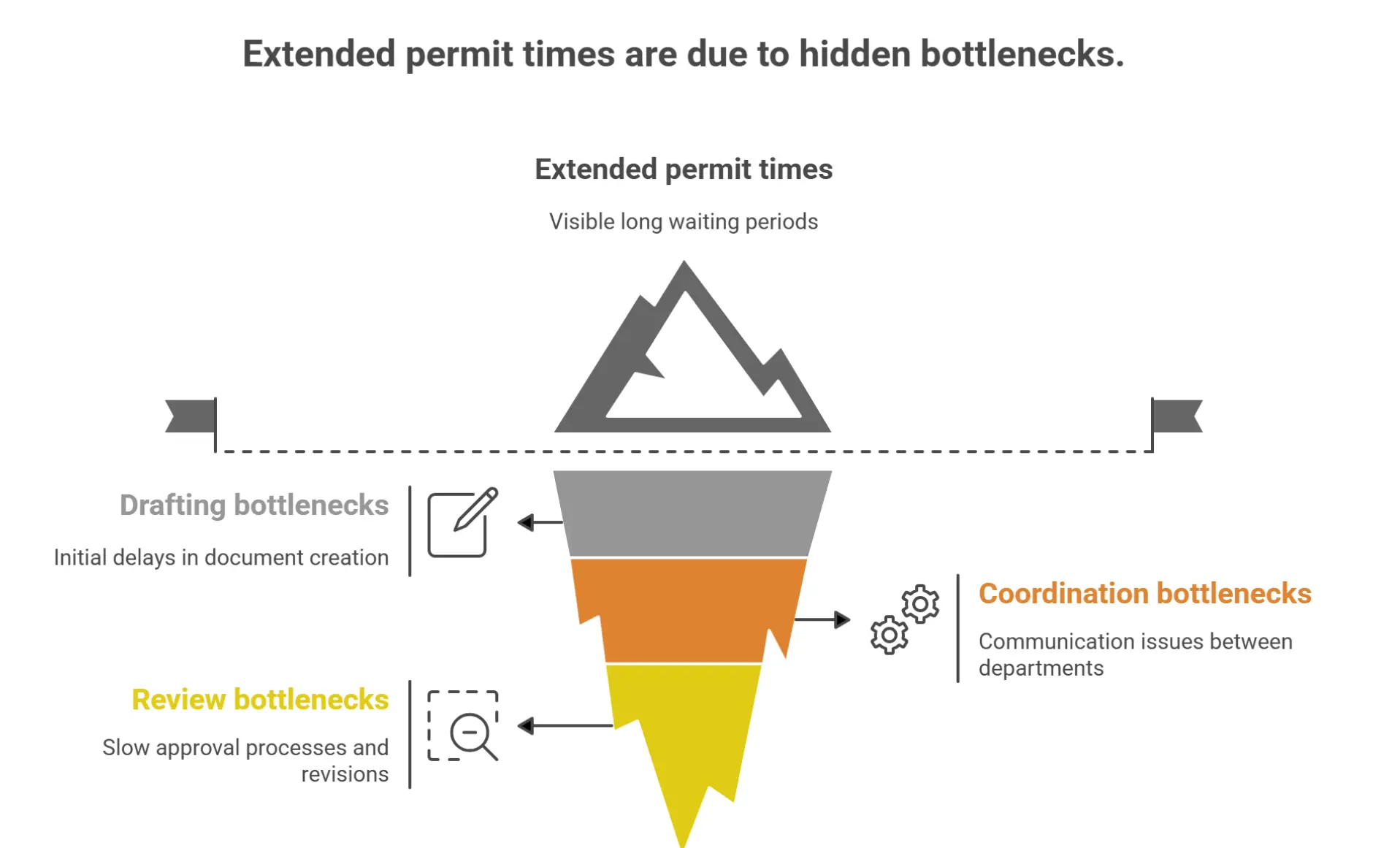
- Urban infill housing projects: City approvals often come with long queues. Cutting two weeks means you can secure a utility tap or begin site prep earlier, keeping momentum in tight neighbourhoods.
- Affordable housing developments: Tax-credit milestones are unforgiving. Hitting a permit target two weeks sooner can secure disbursements and start site work in the current draw period.
- Commercial developments: For developers facing high land holding costs, delay equals thousands in weekly interest payments. Two weeks saved could mean staying ahead of a lender’s financing milestones.
Example calculation: On a $20M mixed-use modular project, two weeks of reduced delay could save $25,000–$40,000 in carrying and labour costs.
Common Bottlenecks and How to Avoid Re-reviews
Even modular housing can hit roadblocks if details are overlooked. The most frequent bottlenecks include:
- Incomplete submittals: Missing geotechnical reports, fire suppression details, or shop drawings.
- Unclear scope in CDE uploads: Wrong file names or misplaced documents in Autodesk Construction Cloud or BIM 360.
- Correction notices from the AHJ: Often triggered by minor drafting inconsistencies or outdated code references.
- BIM coordination & clash detection. Hard/soft clashes stall reviewers. Run Navisworks search sets nightly and attach screenshots to Issues; Dodge SmartMarket reports coordinated BIM, which reduces errors and RFIs.
- State modular label & local interfaces. Ensure the state label packet is present, then show local foundation, utilities, and fire connections clearly.
How to avoid delays:
- Use a permit expeditor for modular projects to pre-check packages.
- Set up parallel construction workflows (site prep continues while the permit is reviewed).
- Keep a correction notice log, monitored by a remote assistant, so no requested change is missed.
Staffing to Accelerate Permits: Remote Roles You Can Add This Week
Expanding your support team is one of the fastest ways to prevent delays. Remote roles that can help include:
- Permit expediter: Tracks AHJ requirements, submits documents, and coordinates with city plan check staff.
- BIM coordinator: Ensures Revit models align with codes, updates LOD requirements, and manages version control in the CDE.
- Document control assistant: Manages submittals, RFIs, and change orders in tools like Procore or Asana.
- Virtual architect/project manager: Oversees milestones, meets deadlines, and keeps all stakeholders aligned.
Tie these roles to a 24/7 handoff: local team posts redlines at 6 p.m.; Remote AE updates models and packets overnight; you submit at 9 a.m.
Ready to Speed Up Your Modular Projects?
Cutting just two weeks from the design-to-permit timeline can mean faster groundbreaking, reduced holding costs, and fewer headaches with AHJs. At Remote AE, we provide virtual assistants who support your permitting workflows, from preparing shop drawings and managing correction notices to tracking RFIs and submittals in BIM 360. Contact Remote AE today to see how we can accelerate your modular housing projects with expert remote staffing support.
FAQs – Modular Housing
Do modular projects need permits different from those for site-built projects?
No. Modular projects follow the same building codes as site-built structures. The difference is that factory modules are inspected at the state level, while the site work is permitted locally.
How long do modular permits take in the U.S.?
Timelines vary by jurisdiction, but modular permits are often faster than site-built since modules come pre-approved at the state level. Local permits still take a few weeks to a few months, depending on the review backlog.
What documents are required for a modular building permit?
Typical requirements include architectural drawings, structural calculations, site plans, foundation plans, energy compliance reports, and factory certifications. Some states also require a copy of the state approval stamp for modules.
Can parallel site/factory work speed permits or only construction?
Parallel work speeds construction, but does not permit approvals. Permits must still be in place before site work begins, but the overlap of factory production and site prep shortens project timelines.
Who signs off on factory modules, state or local?
State agencies certify factory-built modules. Local authorities still issue permits for the foundation, utility connections, and occupancy. Both sign-offs are required for project completion.